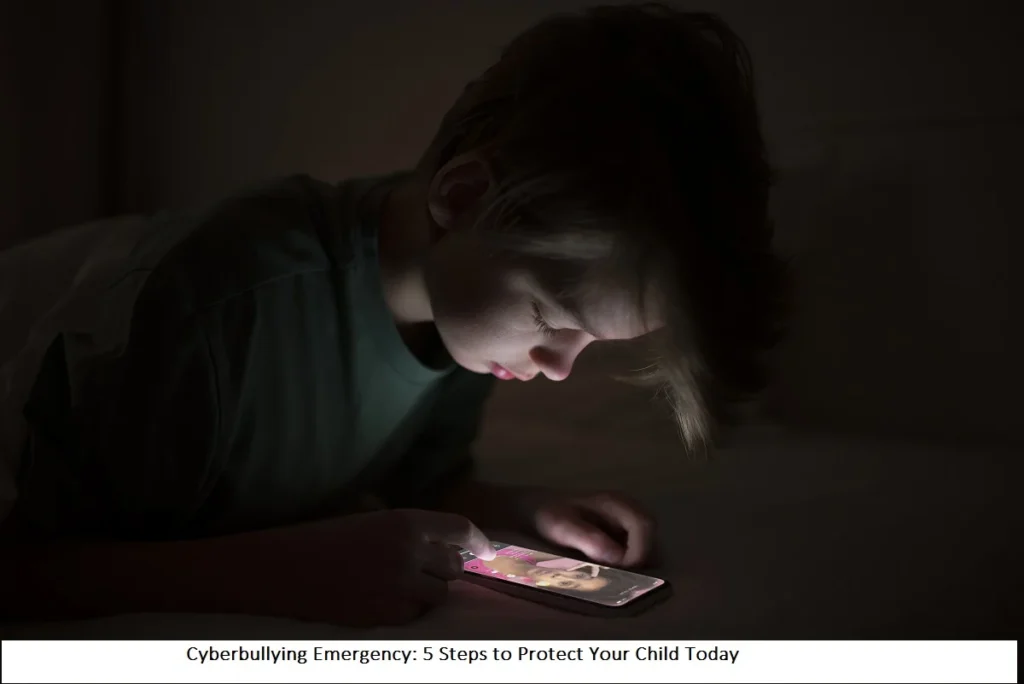
Finding out that your child is being bullied online can be frightening—especially when cruel messages, impersonation, threats or embarrassing posts are spreading quickly. The priority is not to confront everyone immediately. It is to keep your child safe, preserve appropriate evidence and report the behavior to people who can help.
This guide explains five steps parents can take after discovering cyberbullying, along with what to do when there are threats, sexual images, or signs of serious emotional distress.
Step 1: Check Your Child’s Immediate Safety and Listen
Start with a calm conversation: “I’m glad you told me. I want to understand what happened, and we’ll work out the next step together.” Ask what has been said, whether anyone has made threats, whether the behavior is continuing, and whether your child feels safe at school and at home.
Avoid blaming your child or automatically taking away their device as punishment. The American Academy of Pediatrics warns that fear of losing access to technology may discourage children from reporting online bullying in the future.
Urgent situation: If there are credible threats of immediate violence, a child is in immediate danger, or a child is expressing suicidal thoughts or intent to harm themselves, contact appropriate local emergency or crisis services immediately. Do not leave a child at imminent risk alone.
Step 2: Record the Evidence Without Spreading It Further
For ordinary bullying messages or posts, save the dates, times, usernames, account links and screenshots before blocking or deleting anything. Keep a brief timeline of what happened, who was involved and whether there were witnesses.
StopBullying.gov recommends documenting the behavior, avoiding responses or forwarding abusive messages, and using records when reporting to schools, services or social platforms.
Important exception: If the case involves nude or sexually explicit imagery of a minor, do not download, copy, forward or redistribute the image as ordinary “evidence.” Record non-graphic details such as the account, link and circumstances, and seek help from the appropriate reporting service or authorities. If your child has a copy on their own device, specialist services can explain safer options.
Step 3: Report and Block the Account
Use the relevant platform’s reporting tools for bullying, harassment, impersonation, threats, privacy violations or nonconsensual imagery. After saving appropriate evidence, block or mute the account as needed and review privacy settings.
Help your child check:
- Who can send messages or comment?
- Who can view posts, stories and location information?
- Whether an impersonation account is using their name or photos;
- Whether there are unknown users in group chats or private messages;
- Whether passwords or recovery options may have been compromised.
Platform reports do not always resolve a problem immediately. Keep records of reporting reference numbers and any responses.
Step 4: Contact the School or Relevant Adult When Appropriate
If the bullying involves classmates, teammates or school-related groups, contact a teacher, school counselor, safeguarding lead or administrator. Describe the specific conduct, how it is affecting your child, and any safety concerns.
For example:
“My child has received repeated harmful messages from students connected to the school. I have dates and screenshots of the messages. I would like to understand the school’s reporting process and discuss how my child can feel safe while the matter is addressed.”
Ask about the school’s policy, planned next steps and how your child will be protected from retaliation. Follow up in writing so there is a clear record.
Do not assume a universal legal deadline. School obligations vary by country, state, school system and the facts of the case. If you are considering a formal legal complaint, seek advice from a qualified professional in your jurisdiction rather than relying on a template or an unsourced claim of “48-hour” compliance.
Step 5: Support Your Child After the Incident
Cyberbullying may affect sleep, concentration, school attendance, friendships and emotional well-being. Check in without demanding updates constantly. Let your child know they can tell you if the situation worsens.
Consider support from a school counselor, pediatrician or qualified mental-health professional if your child becomes persistently anxious, withdrawn, hopeless or unable to function as usual. Do not treat distress as an overreaction.
It may help to agree on a short plan: who your child can contact at school, what to do if a new account appears, when to take a break from the platform, and which adult to approach if they feel unsafe.
When Should Parents Contact Law Enforcement?
Threats of violence, stalking, extortion, sexual exploitation, severe harassment or other potentially criminal behavior may require law-enforcement involvement. Rules and reporting channels vary by location.
Where a child has been targeted with sexual exploitation or intimate-image threats, act promptly and seek specialist support. In the United States, the National Center for Missing & Exploited Children (NCMEC) provides a CyberTipline for suspected child sexual exploitation.
NCMEC’s free Take It Down service helps people address online nude or sexually explicit images taken before they turned 18. It creates a digital fingerprint on the person’s device that participating platforms can use to detect and remove matching content; the original image is not uploaded to that service.
Outside the United States, contact local child-protection, cybercrime or emergency services and consult their instructions. The existence of U.S. resources does not replace local reporting requirements.
What Parents Should Avoid
- Do not blame the child. Responsibility belongs to the people engaging in bullying or abuse.
- Do not publicly retaliate. Arguments with the other child or their family on social media can make the situation harder to resolve.
- Do not repost humiliating content. Sharing it to “prove what happened” can spread the harm.
- Do not make unverifiable legal threats. Use the school’s actual policy or obtain qualified legal advice.
- Do not promise instant removal. Report the content, document follow-ups and prioritize the child’s well-being.
Preventing Future Cyberbullying
Regular, nonjudgmental conversations about online experiences help children recognize when to ask for support. Encourage reasonable privacy settings, safe account security, and a clear plan for reporting troubling content.
Read our guide on protecting teenagers from cyberbullying for ongoing prevention, or why over-monitoring social media can backfire for a balanced approach to supervision.
Frequently Asked Questions
What should I do first if my child is being cyberbullied?
Check their immediate safety, listen calmly, and ask what happened. Then document appropriate evidence and report the behavior. Seek urgent help if there are threats of immediate harm or suicide risk.
Should I tell my child to delete the messages?
For ordinary bullying, preserve relevant screenshots, dates and links before blocking or deleting messages. Never forward humiliating content, and do not save or circulate sexual images of minors as ordinary evidence.
Can a school act on cyberbullying that happens outside school?
Sometimes, particularly when it affects safety or school participation. The school’s role and legal obligations depend on the jurisdiction and circumstances. Report the issue and ask about the relevant school policy.
Should I take away my child’s phone?
Avoid using device confiscation as automatic punishment for reporting bullying. Discuss reasonable safety changes collaboratively so your child remains willing to seek help.
What if someone threatens to share an intimate photo of my child?
Take the threat seriously. Do not pay or comply with demands, do not spread the material, and seek appropriate law-enforcement or child-protection help. In the U.S., NCMEC’s CyberTipline and Take It Down may be relevant resources.