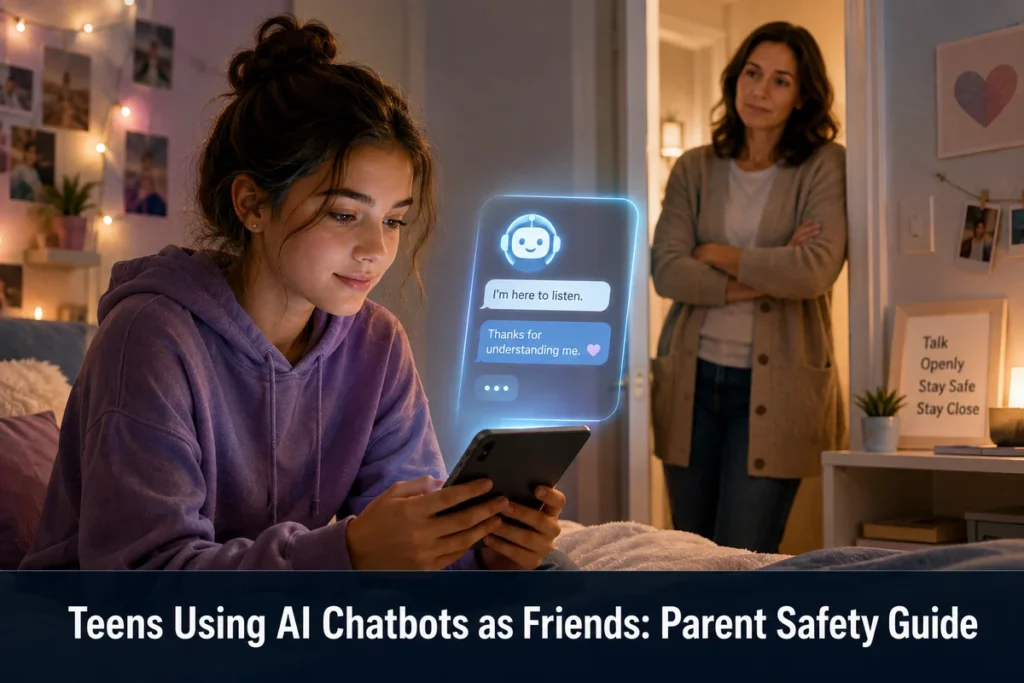
Many parents know their teen uses the internet for homework, games, videos, and social media. But a newer habit is growing quietly: teens using AI chatbots as friends. For some teenagers, these chatbots are not just tools. They feel like listeners, advice-givers, comforters, and private companions.
This does not mean every teen who talks to AI is in danger. But it does mean parents need to understand what is happening before it becomes a hidden emotional habit.
Recent research shows teen AI use is no longer rare. Pew Research Center found that 64% of U.S. teens say they use AI chatbots, while only 51% of parents think their teen uses them. This gap matters because many parents may not fully know how often their child is using AI or what they are using it for.
This is why parents need better awareness of digital habits, privacy, and phone activity monitoring for family safety before AI becomes another private space they do not understand.
Why Are Teens Using AI Chatbots as Friends?
Teenagers often want to talk, but they do not always want to be judged. This is one big reason teens using AI chatbots as friends has become such an important parenting issue.
An AI chatbot is always available. It does not roll its eyes. It does not interrupt. It does not say, “You are being dramatic.” For a teen who feels lonely, anxious, shy, or misunderstood, that can feel comforting.
Some teens may use AI for simple things like homework help, jokes, stories, or advice about what to say to a friend. But others may begin using AI for deeper emotional needs, such as sadness, relationship problems, loneliness, stress, or feeling left out.
Pew Research Center also reported that some teens use chatbots for emotional support, advice, or casual conversation. That matters because emotional support is not the same as asking AI to explain a math problem or write a study plan.
This connects closely with confidence and real-life communication. If your child struggles to speak up, make friends, or handle social pressure, you may also find this guide helpful: How to Improve Social Skills in Teenagers.
Why AI Chatbots Feel So Real to Teenagers
AI chatbots are designed to respond quickly, warmly, and personally. Some can remember details, ask follow-up questions, and speak in a way that feels caring. This can make a teenager feel seen and understood.
That is where the risk begins.
A chatbot may sound kind, but it does not truly understand your child. It does not know your child’s full life, family situation, mental health history, school pressure, friendships, or emotional patterns. It predicts responses. It does not love, protect, or take responsibility like a real person should.
This is why teens using AI chatbots as friends can become complicated. The teen may feel emotionally attached to something that sounds human but is not human.
The American Psychological Association has also warned parents and caregivers to stay connected when teens turn to AI for advice, companionship, or emotional support.
The Hidden Risk: AI Can Become Easier Than Real People
The biggest danger is not that a teen asks AI one question. The bigger problem is when AI becomes the first place they go for comfort.
Real relationships are not always easy. Friends misunderstand. Parents set limits. Teachers correct mistakes. Siblings annoy each other. But those difficult moments teach patience, empathy, communication, and emotional strength.
AI does not work the same way. It usually tries to keep the conversation going. It may agree too much. It may comfort too quickly. It may not challenge harmful thoughts strongly enough. For a teen, this can slowly make real people feel harder to deal with.
So the concern is not just screen time. The concern is emotional dependence.
When teens using AI chatbots as friends begin to prefer AI over real conversations, parents should take notice. This is also why raising teenagers today needs more listening, more emotional awareness, and smarter digital boundaries.
Signs Your Teen May Be Too Attached to an AI Chatbot
Parents should not panic, but they should observe carefully. Some warning signs include:
- Your teen spends long periods talking to an AI chatbot privately.
- They become defensive or secretive when asked about it.
- They say the chatbot “understands me better than anyone.”
- They use AI for emotional support more than they talk to family or friends.
- They seem more withdrawn from real-life relationships.
- Their mood changes after chatbot conversations.
- They ask the chatbot for advice about serious problems, self-worth, relationships, or mental health.
One sign alone does not prove danger. But a pattern matters.
If there are younger children in the home, parents should also remember that older siblings’ habits can influence younger ones. This is similar to how teen behavior can affect younger siblings in quiet ways parents may not notice at first.
Should Parents Ban AI Chatbots Completely?
For most families, a total ban may not work. Teens are curious, and AI is becoming part of school, search, apps, and daily online life. If parents only ban it, some teens may simply hide it.
A better approach is guided use.
Parents should talk about AI the same way they talk about social media, online strangers, gaming, and phone habits. The message should be clear:
AI can be useful, but it should not replace real people.
This balanced approach helps teens feel less attacked. It also keeps the door open for honest conversations.
Common Sense Media reported that nearly three in four teens have used AI companions, and half use them regularly. Their research also raises concerns about trust, emotional dependence, and safety for young users.
What Parents Should Say to Their Teen
Do not start with blame. Start with curiosity.
Instead of saying:
“Why are you talking to a robot? That is weird.”
Say:
“I know AI chatbots are common now. What do you usually use them for?”
Instead of saying:
“You are not allowed to use that.”
Say:
“I want to understand how you use it, especially if you ever use it for advice or emotional stuff.”
Instead of saying:
“AI is dangerous.”
Say:
“AI can be helpful, but it can also give wrong advice. I don’t want you handling serious feelings alone with a chatbot.”
This tone matters. If your teen feels judged, they may hide. If they feel respected, they may talk.
Parents who are raising teens in a world that never stops need to create a home where children feel heard before they look for comfort from a screen.
Safe Rules for Teens Using AI Chatbots as Friends
Parents should set simple, clear rules. These rules should not sound like punishment. They should sound like protection.
1. AI is not a therapist
Tell your teen that an AI chatbot can talk, but it cannot replace a counselor, parent, doctor, teacher, or trusted adult.
2. Never share private information
Teens should not share their full name, address, school name, phone number, passwords, private photos, family problems, or anything that could identify them.
3. Do not follow serious advice without checking
If AI gives advice about health, relationships, self-harm, depression, bullying, sex, violence, or legal trouble, your teen should talk to a real adult.
4. Keep AI use visible, not secret
This does not mean parents must read every message. It means AI should not become a hidden emotional world that parents know nothing about.
5. Balance AI with real connection
If your teen uses AI for comfort, they should also have real human support: parents, friends, relatives, teachers, mentors, or counselors.
The Parent Question That Matters Most
The most important question is not:
“Is my teen using AI?”
The better question is:
“What need is AI filling for my teen?”
If your child is using AI because they are curious, creative, or learning, that is one thing.
If your child is using AI because they feel lonely, unheard, anxious, rejected, or emotionally unsafe, that is a deeper issue.
This is where parenting matters most. The chatbot may be the symptom, not the real problem.
How to Make Your Home Safer Than a Chatbot
If parents want teens to stop depending on AI emotionally, they must become easier to approach.
That does not mean parents should become permissive or soft about everything. It means teens need to know they can speak without immediately being shouted at, mocked, lectured, or punished.
Try asking:
“What is something you wish adults understood about teenagers?”
Or:
“When you are stressed, do you feel like you can talk to me?”
Or:
“Do I react too strongly when you tell me things?”
These questions can feel uncomfortable, but they are powerful. Many teens do not avoid parents because they hate them. They avoid parents because they fear the reaction.
A home where teens feel emotionally safe is still stronger than any chatbot.
When Parents Should Be More Concerned
Parents should take the issue more seriously if a teen is already struggling with depression, anxiety, isolation, bullying, self-harm thoughts, eating issues, or extreme mood changes.
In those cases, AI chatbot use needs closer attention. A teen in emotional pain may become attached faster because the chatbot feels safe and available.
If your teen talks about wanting to disappear, hurt themselves, or not be alive, do not treat it as normal chatbot use. Get immediate support from a mental health professional, emergency service, or crisis helpline in your country.
AI should never be the main support system for a child in crisis.
What Schools and Parents Should Teach About AI
Children need AI literacy, not just AI access. They should understand that AI can sound confident and still be wrong. It can sound caring and still fail to protect them. It can give useful ideas, but it does not have human judgment.
Parents and schools should teach teens to ask:
- Who made this AI tool?
- What data does it collect?
- Can this advice be wrong?
- Is this topic too serious for AI?
- Should I ask a real person too?
This helps teens use AI with awareness instead of blind trust.
Final Advice for Parents
The rise of teens using AI chatbots as friends is not just a technology trend. It is a relationship trend. It shows that many young people want instant comfort, private advice, and judgment-free conversation.
Parents should not respond with panic. But they also should not ignore it.
The best approach is calm, clear, and involved parenting. Talk to your teen. Set boundaries. Teach them what AI can and cannot do. Watch for emotional dependence. Most importantly, make sure your child knows that real people are still the safest place for real pain.
AI can answer a message.
But it cannot replace a parent who listens.