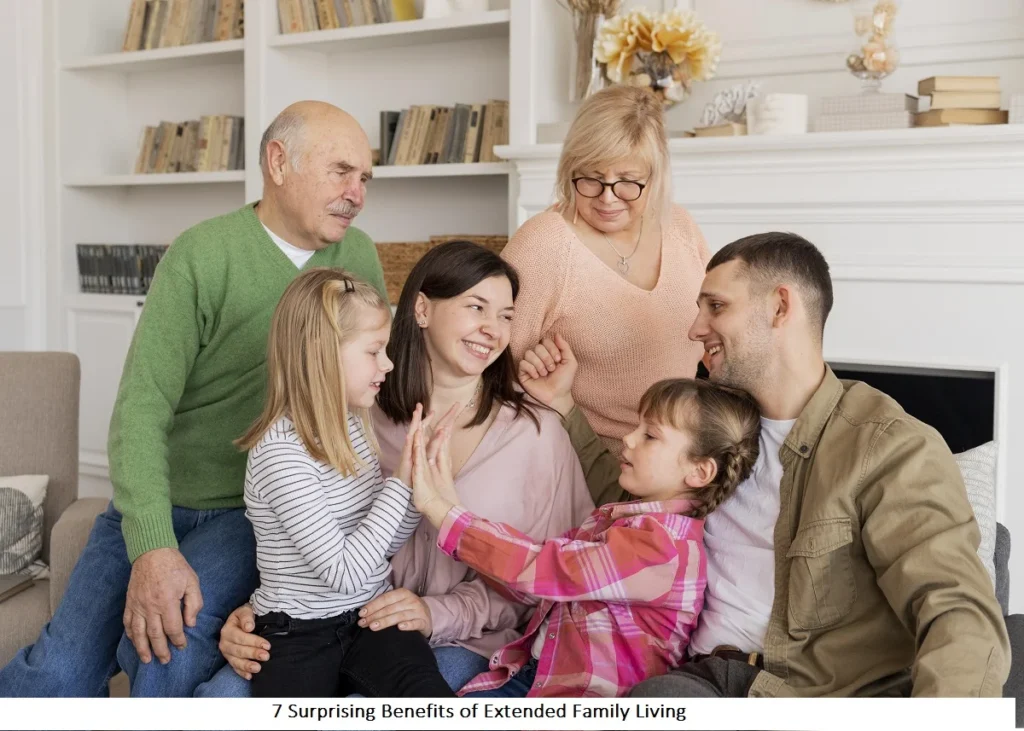
Extended family living can look very different from one household to another. In some homes, grandparents live with adult children and grandchildren. In others, siblings, aunts, uncles, cousins, or other relatives share the same home or live close enough to provide regular support.
For many families, the biggest benefits of extended family living are practical: shared caregiving, lower housing costs, more adults available during emergencies, and less pressure on one parent to manage everything alone. But the emotional benefits can be just as important—children may grow up surrounded by more relationships, older relatives can remain involved in family life, and traditions can be passed between generations.
At the same time, extended-family living is not automatically better than a nuclear-family household. Privacy, boundaries, money, parenting differences, caregiving expectations, and household responsibilities can all create tension. The arrangement tends to work best when families are clear about roles and communicate openly.
What Is an Extended Family Household?
An extended or multigenerational household usually includes relatives beyond parents and dependent children living together. A common example is three generations under one roof: grandparents, parents, and children.
Multigenerational living is not unusual. A 2026 analysis by Pew Research Center found that 22% of Americans lived in multigenerational households in 2024, up from 13% in 1970. The pattern also differs across cultural and ethnic groups, showing that extended-family living is a normal part of family life for many communities.
10 Benefits of Extended Family Living
1. More Practical Support for Parents
Parenting can become exhausting when one or two adults are responsible for every school run, appointment, meal, sick day, activity, and household task. In a supportive extended family, responsibilities can sometimes be shared.
A grandparent may supervise homework while a parent cooks. An aunt may help with school pickup. An older cousin may entertain younger children while adults handle another task.
The benefit is not that relatives should become unpaid childcare. It is that trusted family support can reduce the feeling that one parent has to do everything alone.
2. Children Can Build Relationships With More Trusted Adults
Children benefit from having safe, dependable adults they can turn to. Parents remain central, but grandparents, aunts, uncles, and other relatives can offer another source of affection, advice, and perspective.
Research on grandparent involvement shows that grandparents can play meaningful caregiving, emotional, financial, and developmental roles, although the effects vary considerably depending on the family circumstances. A large systematic review published in Social Science & Medicine found that grandparent involvement takes many forms and that outcomes depend heavily on context rather than simply whether grandparents are present.
This is an important distinction: extended family can be a resource, but the quality of the relationships matters more than the number of relatives in the house.
3. Families May Be Better Able to Share Living Costs
Housing, utilities, groceries, transport, and childcare can be expensive. When several adults share a household, some costs can be divided rather than duplicated.
Potential financial advantages include:
- shared rent or mortgage expenses;
- shared utility bills;
- buying some groceries in larger quantities;
- sharing vehicles or transport;
- reducing paid childcare needs where relatives genuinely want to help;
- sharing household items rather than maintaining separate homes.
However, families should avoid assuming that everyone benefits equally. A relative who provides daily childcare, elder care, cooking, or household work is contributing real labor even if they are not contributing the same amount of money.
4. Children Can Stay Connected to Family History and Culture
Extended family can make family history feel lived rather than abstract. Grandparents and older relatives may pass down:
- family stories;
- languages or dialects;
- religious traditions;
- recipes;
- cultural celebrations;
- stories about migration, work, education, or earlier generations.
These everyday interactions can help children understand where their family comes from and why certain traditions matter.
5. Grandparents Can Remain More Involved in Family Life
Living together or nearby can make it easier for older relatives to remain part of daily family routines rather than seeing children only occasionally.
That can include school events, meals, conversations, celebrations, or simply being present during ordinary days.
But this benefit should not be romanticized. A systematic review of grandparenting and well-being found mixed results for grandparents in three-generation households. In some circumstances involvement can be rewarding; in others, caregiving can become stressful or burdensome. The amount of responsibility and whether the grandparent has genuine choice matter greatly.
6. Parents Can Receive Emotional Backup
Parenting decisions can feel lonely. Having another trusted adult nearby may give parents someone to talk to when a child is struggling, routines are falling apart, or family stress is high.
That does not mean every relative should have equal authority over the child. Too many competing opinions can create more stress rather than less.
The healthiest arrangement is usually one where parents remain clear about major parenting decisions while relatives provide support rather than constant correction.
7. Children May Get More Opportunities to Practice Social Skills
Living with more people creates more everyday situations involving patience, sharing, negotiation, listening, conflict, and compromise.
A child may need to wait for a bathroom, share common space, respect an older relative’s routine, or negotiate with cousins. Those interactions can offer natural opportunities to practice social and emotional skills.
Of course, simply living with many relatives does not automatically create strong social skills. Adults still need to model respectful communication. For teenagers who need more direct support, see our guide on how to improve social skills in teenagers.
8. Families May Have More Support During Illness or Emergencies
Extended-family households may have more flexibility when someone becomes ill, loses a job, has a new baby, needs transport, or faces another short-term crisis.
One adult may be able to stay with a child while another goes to an appointment. Family members may be able to share meals, transport, or administrative tasks.
This kind of informal support can make a difficult period easier, especially when responsibilities are distributed fairly.
9. Older and Younger Generations Can Learn From Each Other
Intergenerational relationships are not one-way. Older relatives may share experience, family knowledge, practical skills, or cultural traditions. Younger relatives may help with technology, new systems, changing social norms, or everyday tasks.
This exchange can strengthen relationships when neither generation assumes it has nothing to learn from the other.
10. Family Bonds Can Become Stronger Through Shared Daily Life
Living together creates more opportunities for ordinary connection: shared meals, school stories, family jokes, small celebrations, conversations after work, or helping one another with everyday problems.
These small interactions can build closeness over time.
But closeness cannot be forced. Families also need privacy, boundaries, and time apart. A crowded house is not automatically a connected house.
Benefits of Extended Family Living for Children
For children, the strongest potential benefits come from the quality of relationships around them.
Children may gain:
- more trusted adults to talk to;
- more opportunities for family connection;
- exposure to different generations and perspectives;
- greater connection to cultural traditions;
- practical support when parents are busy or under stress;
- more everyday opportunities to practice communication and cooperation.
However, researchers caution against assuming that grandparent care automatically improves child outcomes. A 2024 systematic review and meta-analysis found that outcomes varied widely by context, and children in some grandparent-care arrangements had poorer mental-health outcomes than comparison groups. Often, this reflects difficult circumstances that led to the caregiving arrangement in the first place.
The useful lesson for parents is simple: family structure alone does not determine well-being. Stability, safety, supportive relationships, financial circumstances, and the quality of caregiving matter more.
Financial Advantages of Extended Family Living
For parents managing household expenses without a second income, our budgeting guide for single mothers offers more specific ideas on bills, savings and everyday financial planning.
Financial benefits are one of the most common reasons families consider living together.
Possible advantages include:
- sharing housing costs;
- splitting utilities;
- reducing duplicate household expenses;
- sharing transport;
- helping with childcare or eldercare;
- allowing younger adults to save before moving independently;
- making it easier to support an older relative without maintaining a second home.
These benefits are not guaranteed. More people also mean higher food, utility, transport, and space requirements.
A fair arrangement should consider both money and unpaid care work.
Challenges of Extended Family Living
A balanced discussion of the advantages of extended family also needs to acknowledge the disadvantages.
Less privacy
Shared bedrooms, kitchens, bathrooms, and common areas can make people feel constantly observed or interrupted.
Different parenting styles
Grandparents may disagree with parents about discipline, food, screen time, sleep routines, education, or independence.
Unequal household work
One person can quietly become responsible for cooking, cleaning, childcare, or eldercare while others assume that help is simply available.
Financial resentment
Problems can develop when one adult pays more than others or when expectations about rent, groceries, bills, or savings were never discussed clearly.
Intergenerational conflict
Different generations may have different expectations about privacy, religion, clothing, relationships, work, gender roles, or how children should be raised.
Caregiver stress
Grandparents or other relatives can become exhausted when “helping out” gradually turns into full-time caregiving without enough choice or support.
How to Make Extended Family Living Work Better
Shared households also need patience when parents, step-parents and children adjust to new roles. See our practical guide to building a strong blended family for related advice on boundaries and communication.
Before moving in together—or when tensions begin to grow—families should discuss expectations directly.
Agree on money
Decide who pays for rent or mortgage, utilities, groceries, repairs, transport, and shared household expenses.
Protect private space
Even close families need somewhere to withdraw. Bedrooms and personal areas should be respected whenever possible.
Clarify parenting authority
Grandparents and relatives can be valuable sources of support, but parents need clarity about who makes major decisions for the children.
Divide household work
Do not let chores become invisible. Discuss cooking, cleaning, childcare, eldercare, shopping, and transport.
Allow different generations some independence
Living together does not mean doing everything together. Adults and children still need separate friendships, interests, routines, and downtime.
Address conflict early
Small resentments become larger when nobody is willing to discuss them. Regular family check-ins can help resolve practical problems before they turn personal.
Extended Family vs. Nuclear Family: Is One Better?
There is no universally better family structure.
An extended-family household can offer more support, shared resources, and intergenerational connection. A smaller nuclear household may offer more privacy, independence, and clearer decision-making.
What matters most is whether the household is:
- safe;
- emotionally supportive;
- financially workable;
- respectful of boundaries;
- clear about responsibilities;
- stable enough for children and adults to function well.
A healthy extended family is better than a highly isolated household, but a conflict-filled extended household is not automatically healthier simply because more relatives live together.
Why Extended Family Living Is Becoming More Relevant
Extended-family living is not simply an old-fashioned arrangement returning to modern life. Housing costs, childcare needs, aging populations, migration, cultural traditions, and young adults remaining at home longer all contribute to multigenerational households.
U.S. Census data also show that younger adults commonly live with parents: in 2025, 58% of adults ages 18 to 24 lived in their parental home. That figure is broader than multigenerational living, but it illustrates how family households continue to adapt to economic and social realities.
The strongest reason to consider extended-family living is not because every family “should” live this way. It is because, when relationships are healthy and expectations are fair, sharing life across generations can provide forms of support that are difficult to reproduce alone.
Frequently Asked Questions
What are the main benefits of extended family living?
Common benefits include shared caregiving, emotional support, lower duplicated household expenses, stronger intergenerational relationships, cultural continuity, and more trusted adults available to children.
What are the advantages of living in an extended family?
Advantages can include shared housing costs, childcare support, elder support, practical help during emergencies, stronger family connection, and opportunities for children to build relationships with multiple generations.
What are the disadvantages of extended family living?
Common challenges include less privacy, parenting disagreements, unequal chores or caregiving, financial conflict, overcrowding, and tension between generations.
Is living with extended family good for children?
It can be. Children may benefit from supportive relationships with grandparents and other relatives, but outcomes depend on family stability, safety, caregiving quality, conflict levels, and the circumstances that led to the living arrangement.
How can families make multigenerational living work?
Clear agreements about money, chores, privacy, parenting authority, caregiving, and personal space are important. Families should also discuss problems early rather than allowing resentment to build.
Does extended family living save money?
It can reduce duplicated housing, utility, transport, and childcare costs, but larger households also have higher expenses. Savings depend on the household’s income, responsibilities, and how costs are divided.
Sources
- Pew Research Center — Multigenerational Household Trends in the United States
- U.S. Census Bureau — Families and Living Arrangements, 2025
- Social Science & Medicine — How Grandparents Influence Child Health and Development: Systematic Review
- European Journal of Ageing — Grandparenting, Health and Well-Being: Systematic Review
- Journal of Child Psychology and Psychiatry — Grandparental Care and Child Mental Health: Systematic Review and Meta-Analysis